7 pages. The live attack and defence rounds are page 5:
Project overview
PEAS SOC is a nine-zone enterprise network I designed and built from scratch in a Proxmox lab environment for a TAFE group project (CL5, “Build and Battle”), then led the live attack-and-defence exercise against. As team lead, I coordinated the planning, built the core infrastructure, and ran blue-team detection across the exercise.
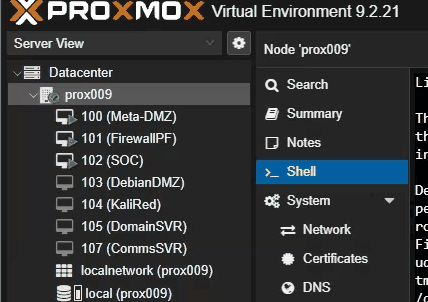
This page covers the whole project end to end: the design decisions before a single VM was built, the network itself, what got attacked and defended across four live rounds, the troubleshooting that didn’t make it into any polished report, and what came out of it. It deliberately leaves out configuration detail (firewall rule syntax, exact RADIUS config, etc.) — that lives in the project’s own playbook and report documents, not here.
Pre-planning and design decisions
Before any build work, the group worked through the network’s zone design and threat model together: which segments a real business would realistically need — a corporate LAN, a dedicated SOC analyst segment, a public-facing DMZ, guest wifi, and a locked-down management plane — and, just as importantly, which of those should never be allowed to talk to each other directly. That “never talk directly” list became the project’s actual security requirement, not an afterthought bolted on after the network was built.
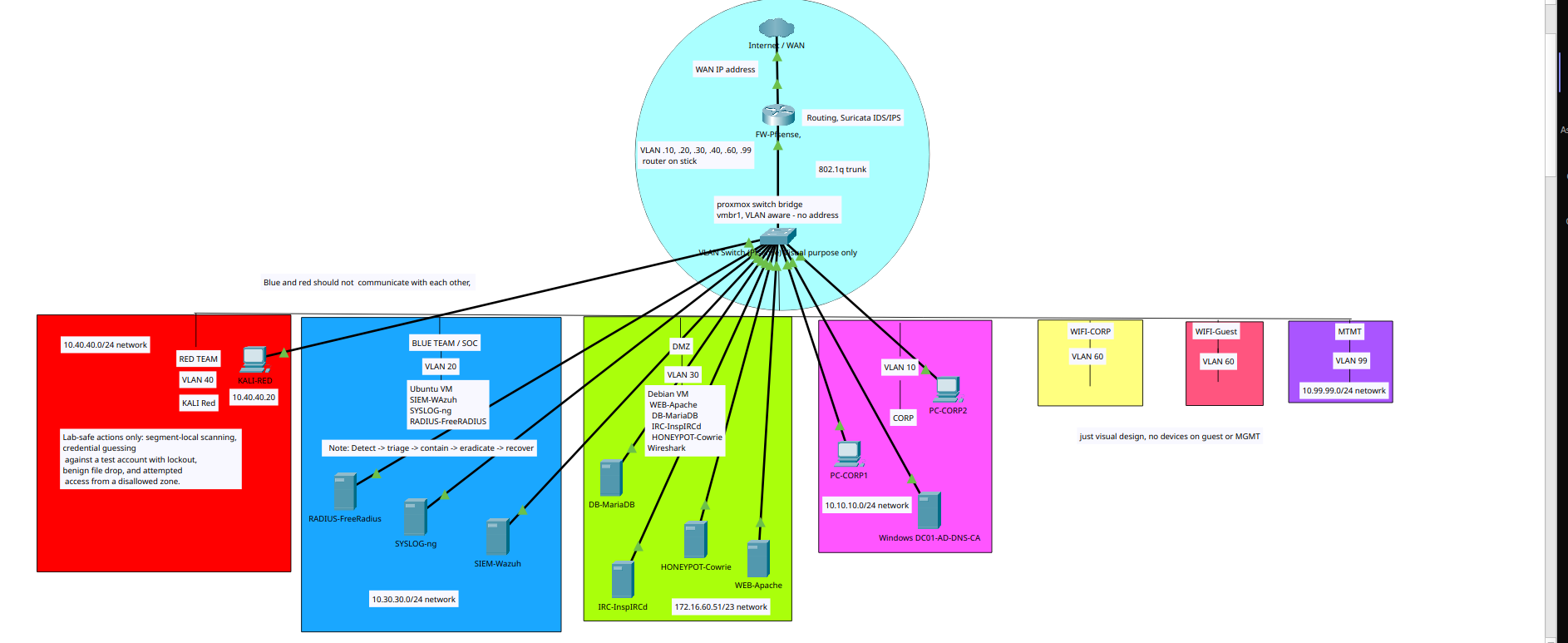
The design went through a real draft stage before it was final. This is my early prototype sketch — same router-on-a-stick concept through pfSense, the same zone split, but still being worked out (VLAN IDs not yet settled for every zone, addressing not yet consistent, the blue/red no-communication rule still just a handwritten note rather than an enforced policy):
That got refined into the final logical network design below — router-on-a-stick through pfSense, with Proxmox’s VLAN-aware bridge handling trunking, every zone on a settled subnet, and the intended team-interaction rules spelled out explicitly instead of left as a note on the diagram:
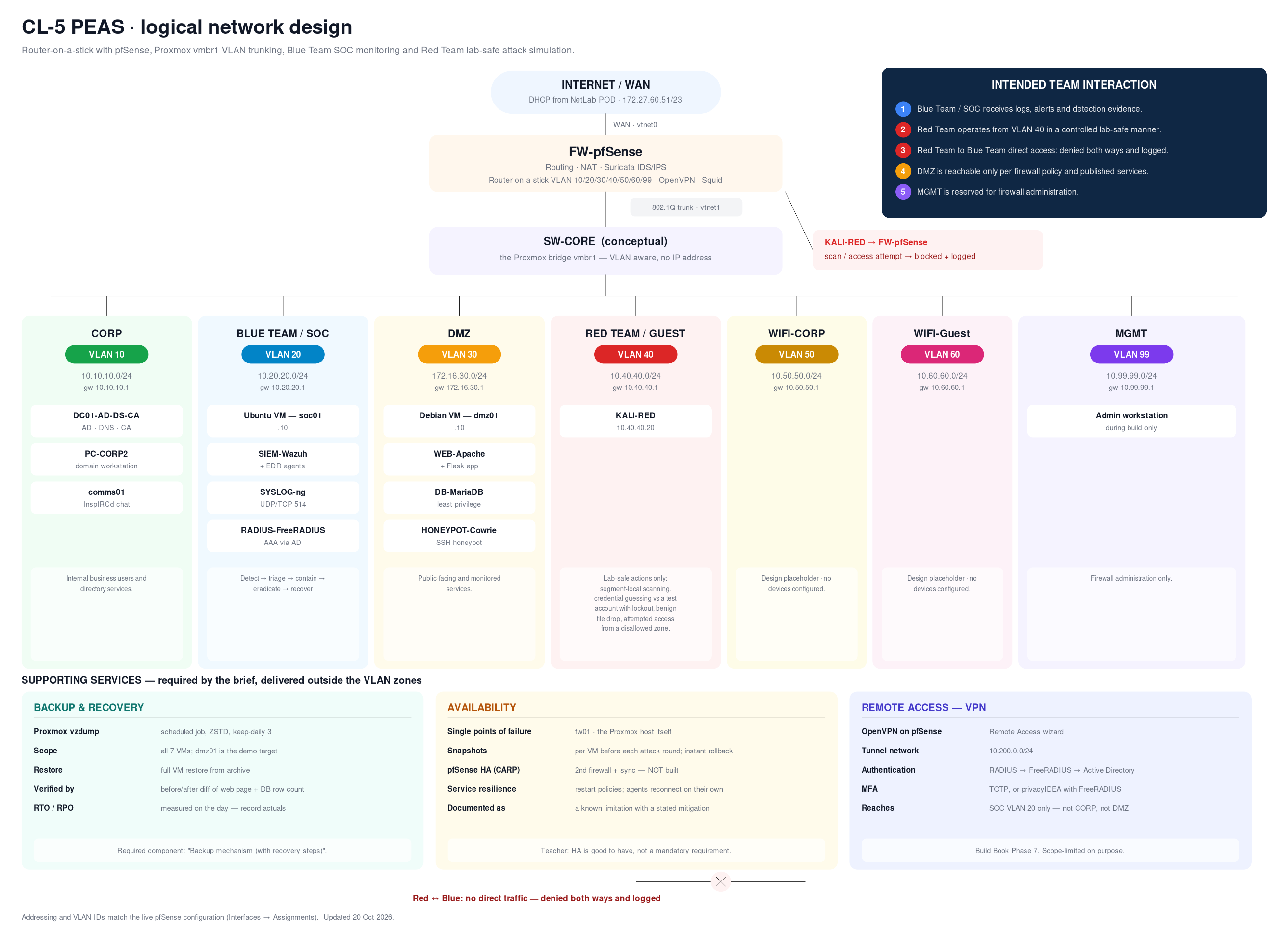
Note: the SSH honeypot (Cowrie) drawn in the DMZ on this design was not used in the actual implementation of the project.
Seven VLANs carry the design: CORP (10.10.10.0/24, AD/DNS/CA plus domain workstations), Blue Team/SOC (10.20.20.0/24, Wazuh + EDR, syslog, FreeRADIUS), DMZ (172.16.30.0/24, the Apache/Flask app and MariaDB), Red Team/Guest (10.40.40.0/24, lab-safe only — segment-local scanning and credential guessing against a test account with lockout), WiFi-CORP and WiFi-Guest (design placeholders, no devices configured), and a locked-down MGMT plane (10.99.99.0/24) reserved purely for firewall administration during the build. The rule the whole design hangs off: Red Team to Blue Team direct access is denied both ways and logged, full stop.
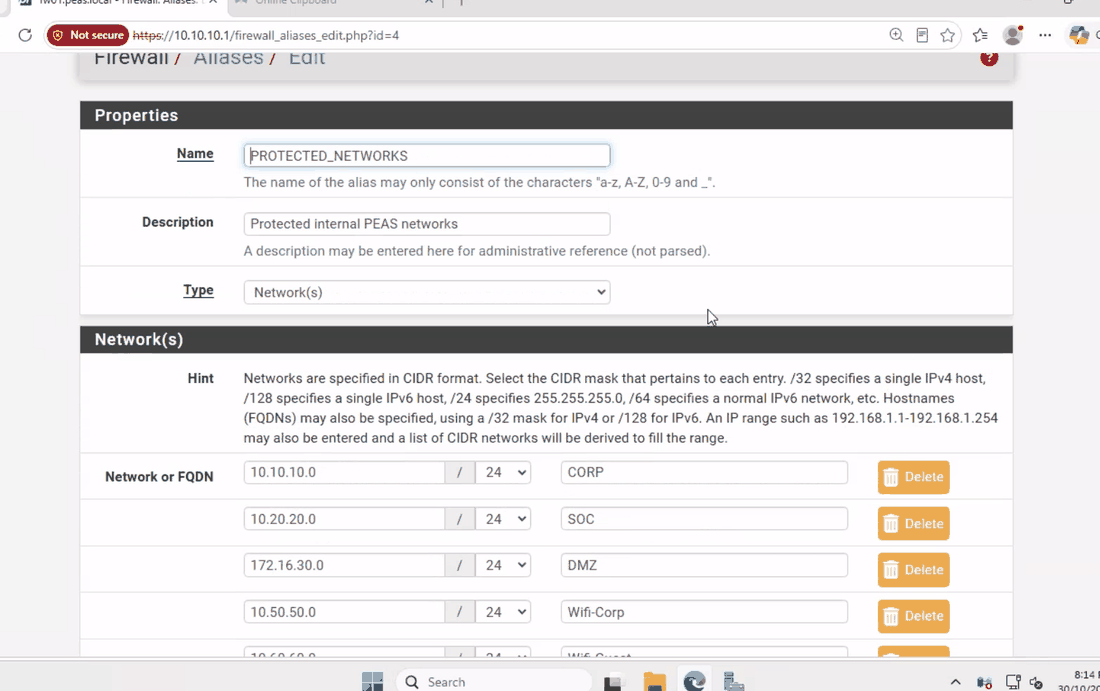
Segmentation was designed around aliases, not one-off rules, so the deny policy could be reasoned about and audited as a whole rather than as a pile of individual firewall entries:
Role and round planning were revisited mid-project too. The group initially scoped a five-round attack/defence exercise with rotating attacker/defender roles each round. Once the blue/red split was finalised, we deliberately cut this back to four rounds with fixed roles, each targeting a different stage of the kill chain — a scoping decision made to keep the exercise focused rather than repetitive, and to give red team more depth per round instead of breadth. Fixed roles also meant blue team built up real familiarity with “their” segment of the network across all four rounds, instead of starting cold each time.
Network architecture
pfSense sits at the centre as firewall and router, segmenting nine zones: WAN, LAN, CORP, SOC, DMZ, GUEST, WIFICORP, WIFIGUEST, and MGMT. Explicit deny rules enforce isolation between zones that should never touch (GUEST can never reach SOC or MGMT), and every block is logged.
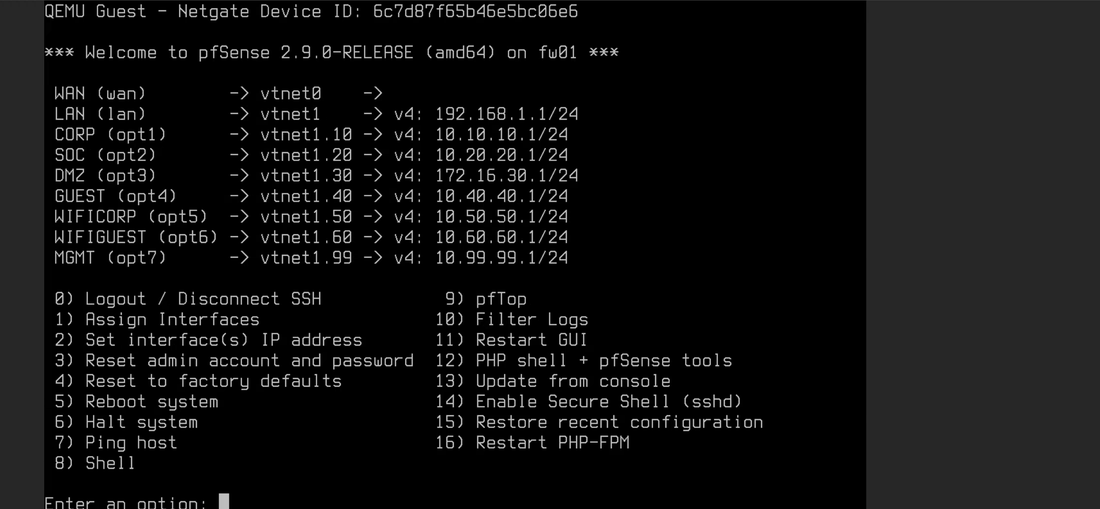
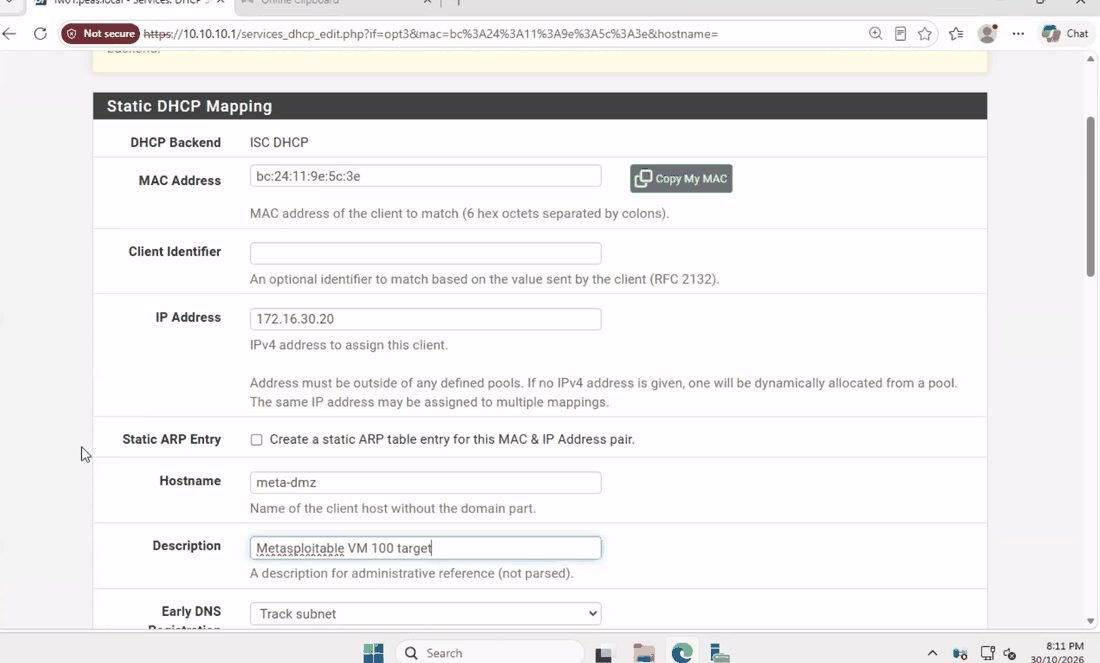
DHCP on each zone uses a mix of dynamic leases and static mappings, so known infrastructure (the SOC tooling, the DMZ target) always comes up on a predictable address instead of drifting:
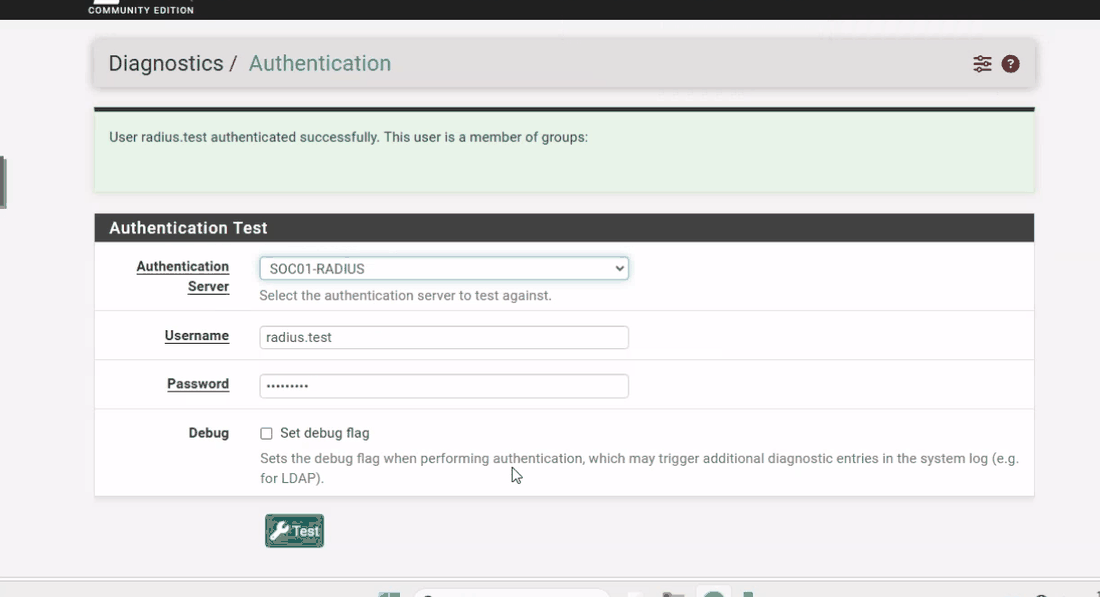
Remote access runs through OpenVPN on pfSense with FreeRADIUS authentication against Active Directory, tunnelling clients onto a dedicated 10.200.0.0/24 network that reaches the SOC segment only — not CORP, not DMZ — with the option to layer TOTP or privacyIDEA for MFA. RADIUS group membership — not just a valid login — determines which internal segments a VPN client can actually reach, proven live both ways: a member of the right group authenticates and is accepted —
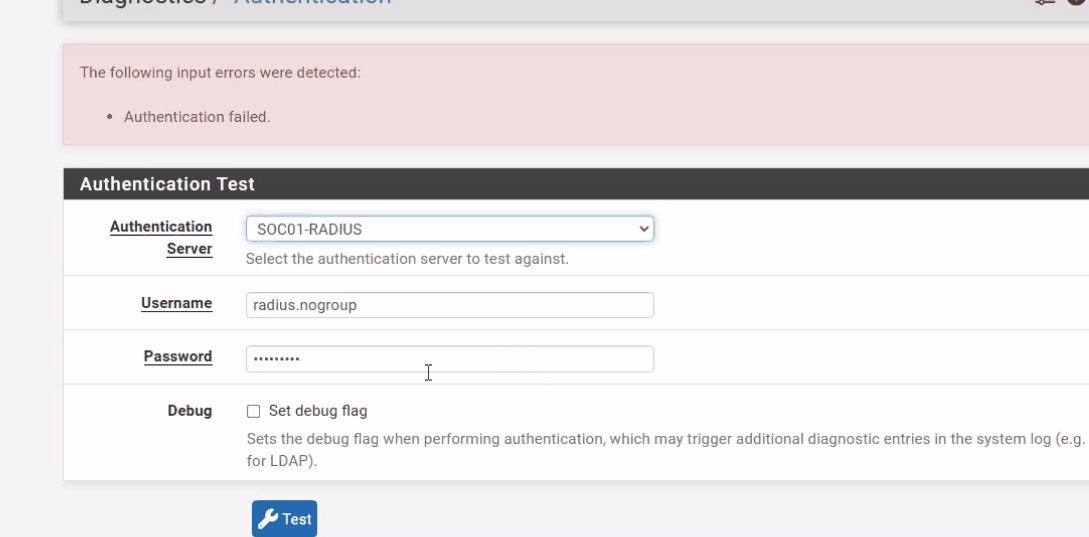
— while an otherwise-valid account with no group membership is correctly rejected at the same test:
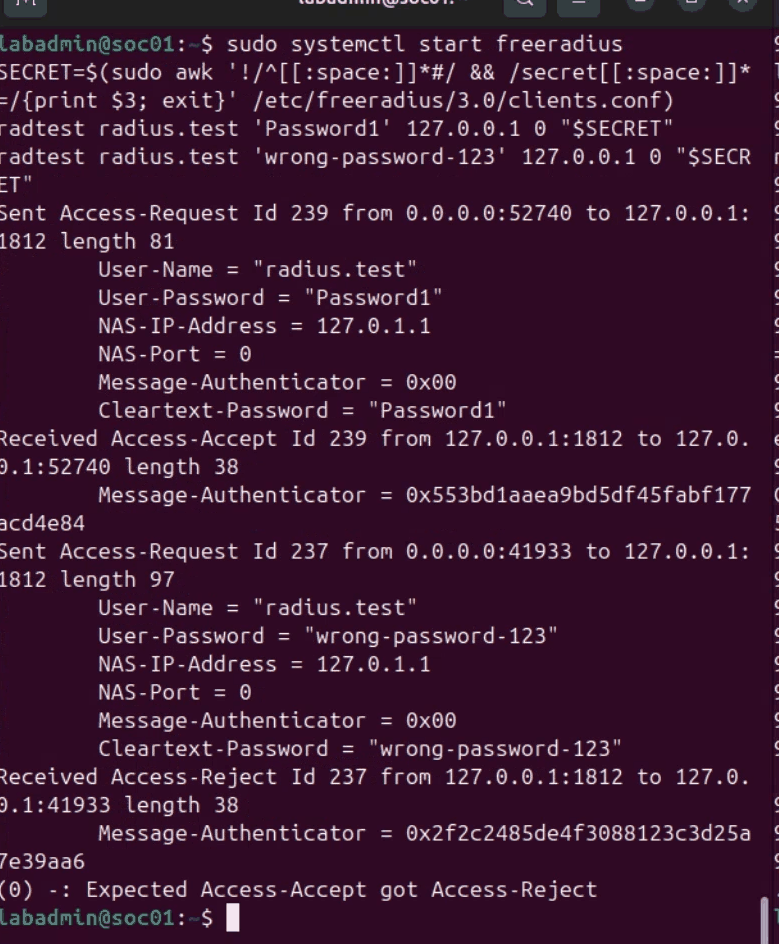
The same accept/reject behaviour, confirmed again from the command line with
radtest against the live FreeRADIUS service — a correct password gets
Access-Accept, a deliberately wrong one gets Access-Reject:
A Squid proxy also sits in the design.
Getting RADIUS working wasn’t a one-shot config, either: an earlier pass failed outright with no response from the server at all —
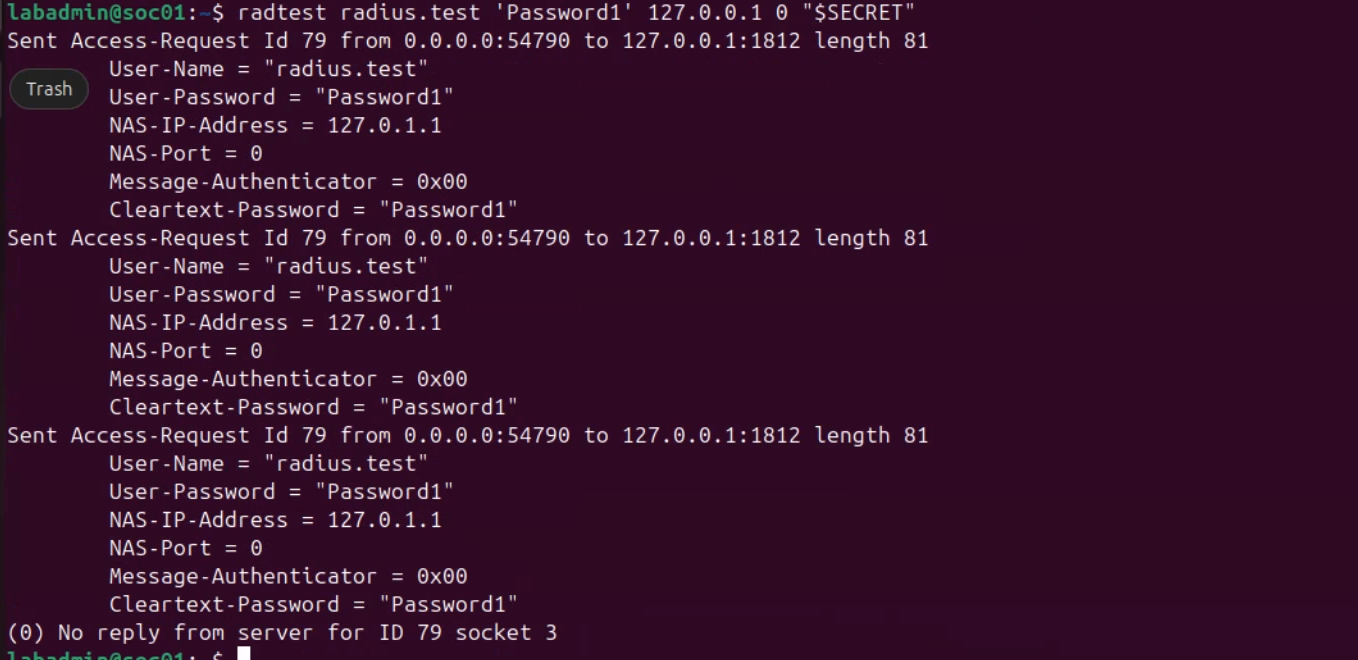
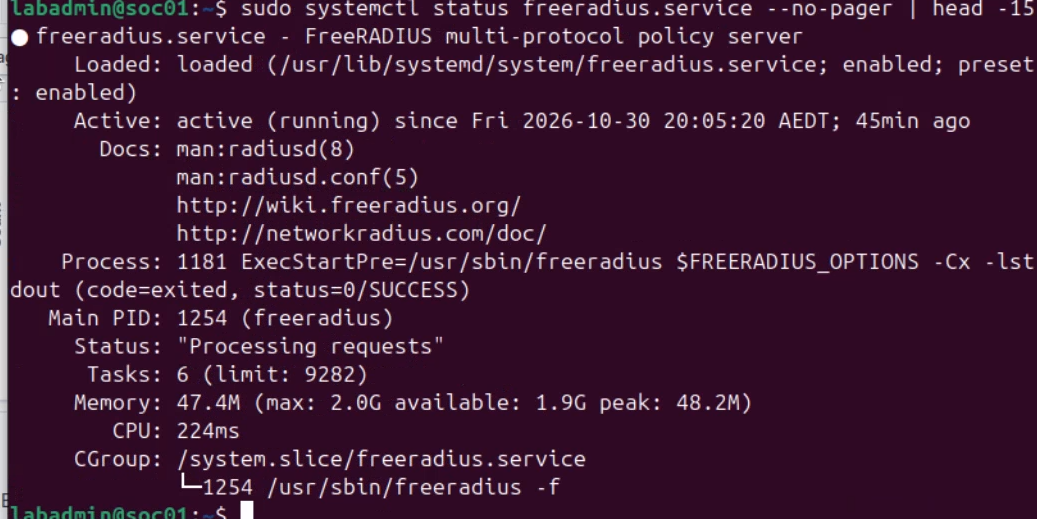
— traced back through the LDAP bind chain and fixed, confirmed by the service itself coming up clean:
What was built
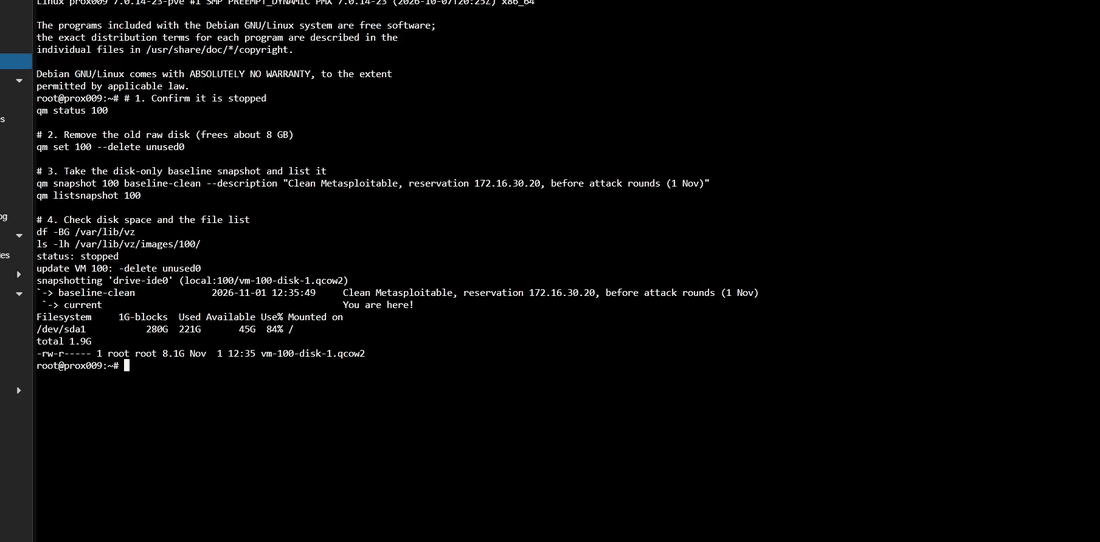
- A Metasploitable-based target VM (VM 100) with a clean-baseline snapshot workflow, rolled back between rounds so every exercise starts from a known, identical state — the disk-only baseline snapshot taken and verified by hand before the first round:
- A custom DMZ web application (PHP + MariaDB) deliberately built with a SQL injection flaw, later expanded with additional database tables to support a full UNION-based extraction chain rather than a single canned exploit — giving red team column-count discovery, padding technique, and multiple targets of different shapes to work through.
- Suricata IDS deployed across GUEST, DMZ and CORP, run in detection-only mode for the first three rounds, with round four dedicated purely to validating blocking behaviour.
- A full backup and disaster-recovery workflow for the firewall, using
Proxmox’s own
vzdumpwith ZSTD compression and a keep-daily-3 retention policy across all seven project VMs — plus a genuinely off-host backup and a timed restore-and-boot test to produce real, measured recovery figures rather than estimates (~2 min 10 sec measured RTO, well inside the 1-hour target, verified by a before/after diff of the web page and database row count).
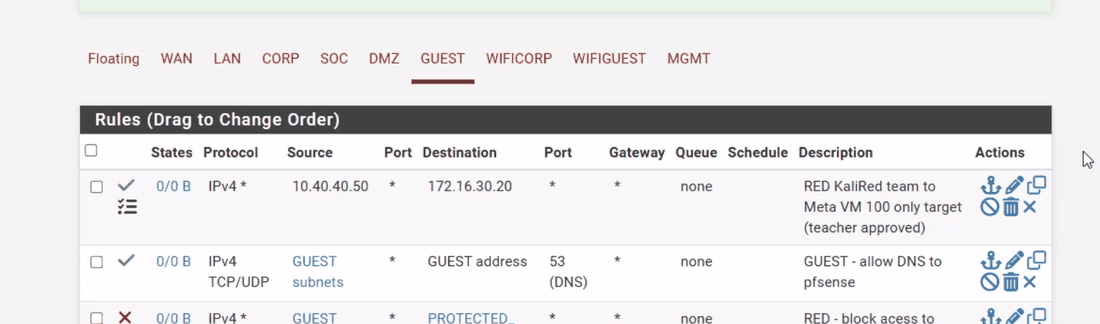
Isolation itself was built and proven incrementally, not assumed: the GUEST zone’s rule set was explicitly tightened to deny reach into the protected internal networks, verified by comparing the rule set before and after the change took effect —
Attack and defence rounds
The live exercise ran as four fixed-role rounds, each with its own focus:
| Round | Focus | Defenders | Attackers |
|---|---|---|---|
| 1 | Reconnaissance & enumeration — Nmap scan, service/version scan | Fixed blue team | Fixed red team |
| 2 | Credential & service exploitation — brute force, FTP backdoor trigger | Fixed blue team | Fixed red team |
| 3 | Web application SQL injection — boolean bypass + UNION-based extraction chain | Fixed blue team | Fixed red team |
| 4 | Blocking-mode validation — Suricata blocking enabled, SYN flood test case | Fixed blue team | Fixed red team |
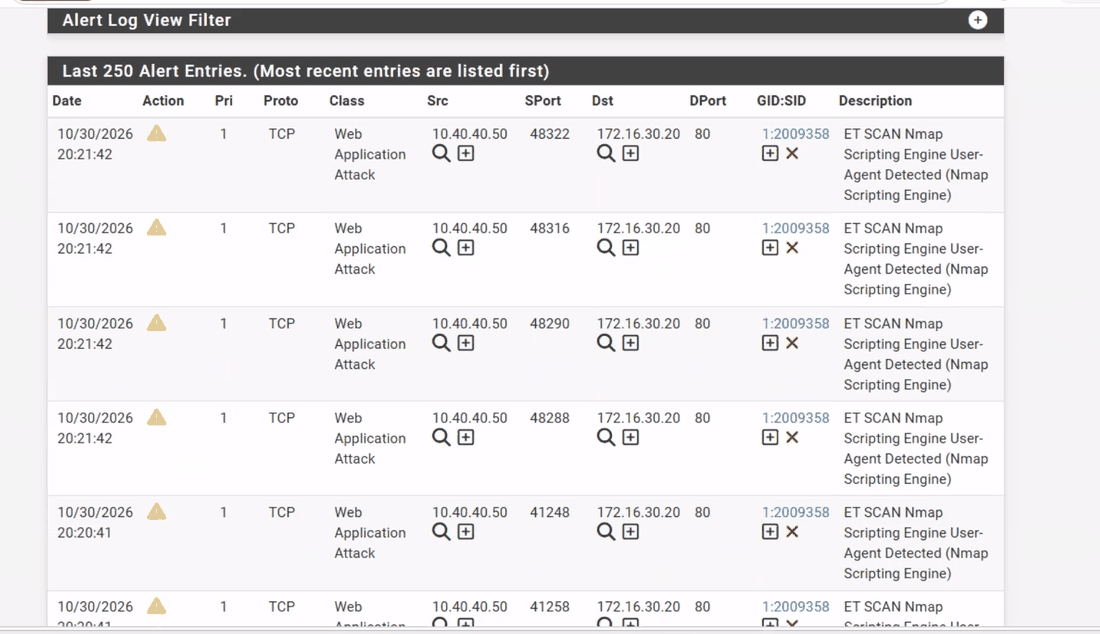
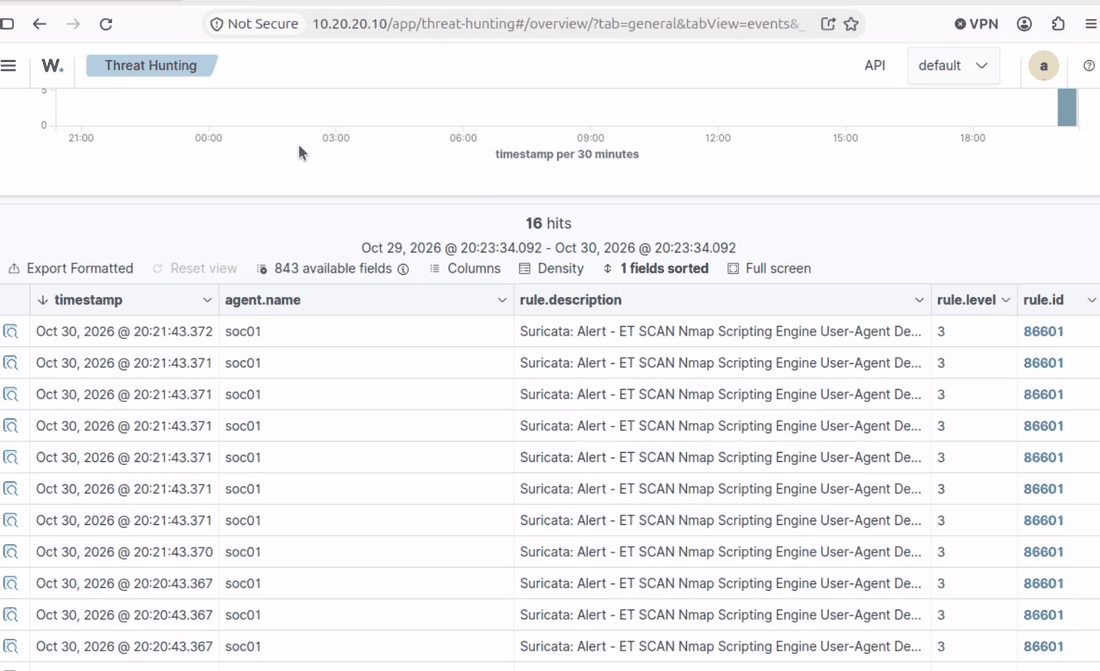
Round 1 — Reconnaissance. Nmap scripting-engine scan detected and correctly attributed:
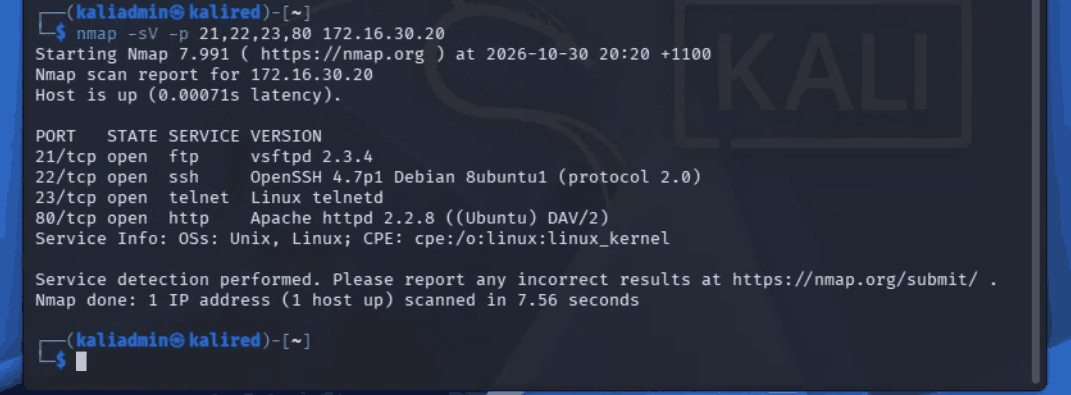
Round 2 — Cross-zone attack attempt and zone isolation. Red team (Kali, on GUEST) attempted to reach a protected internal host directly:
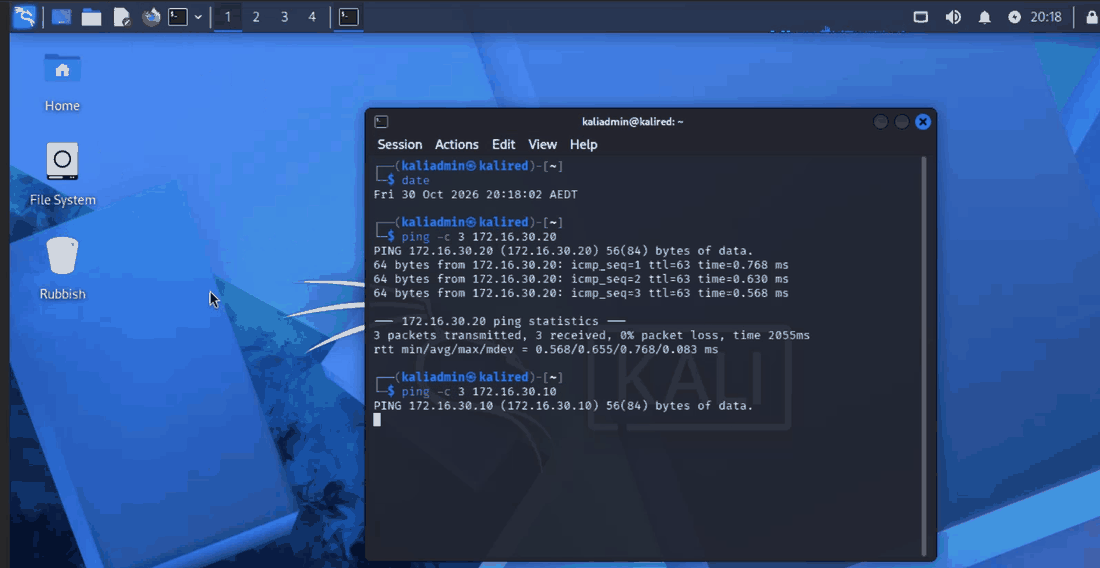
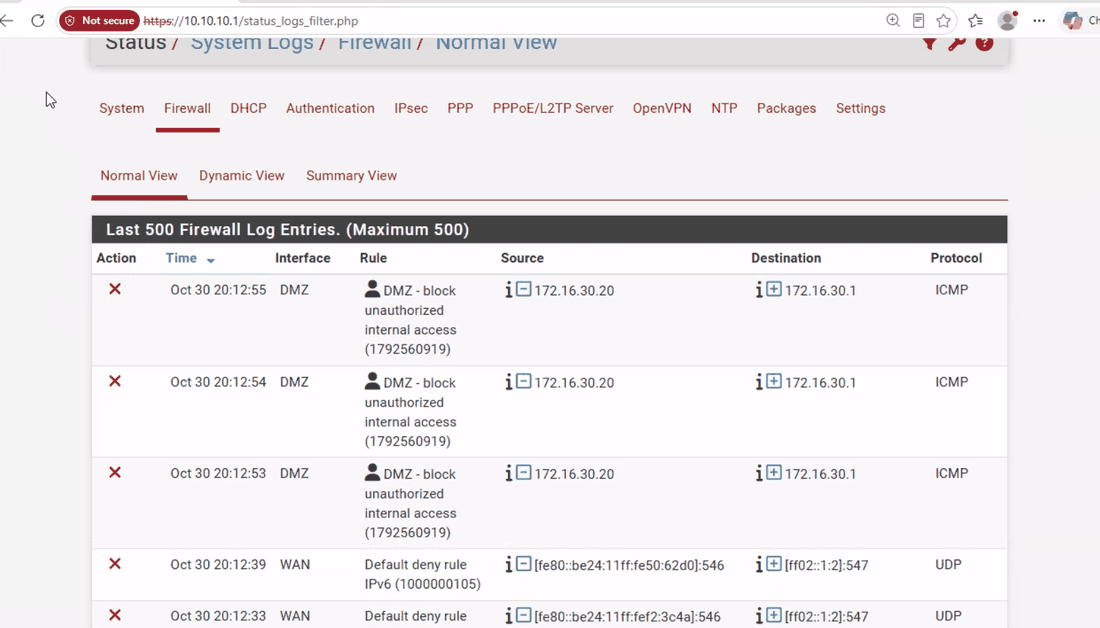
…and was explicitly blocked and logged by the firewall rather than silently dropped, with the rule name and timestamp captured as evidence:
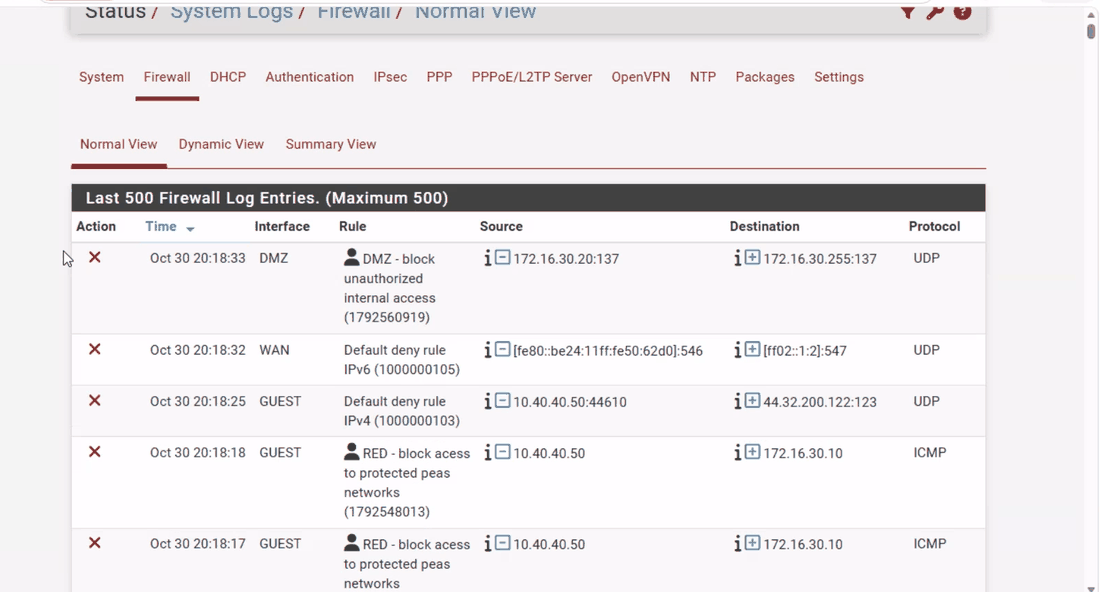
The same isolation behaviour, shown from the other side of the log:
Suricata alerting on the DMZ segment during the exercise:
…correlated against Wazuh for a second, independent view of the same activity:
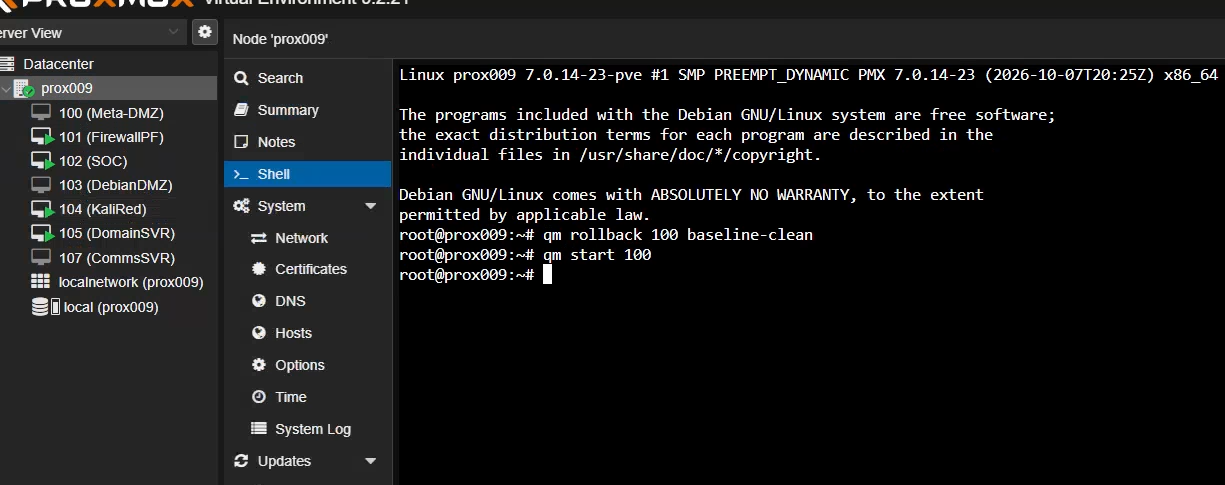
Between every round, VM 100 is rolled back to its clean baseline so each round starts identical — by VM name, not just VM ID, so there’s no ambiguity about which host just got reset:
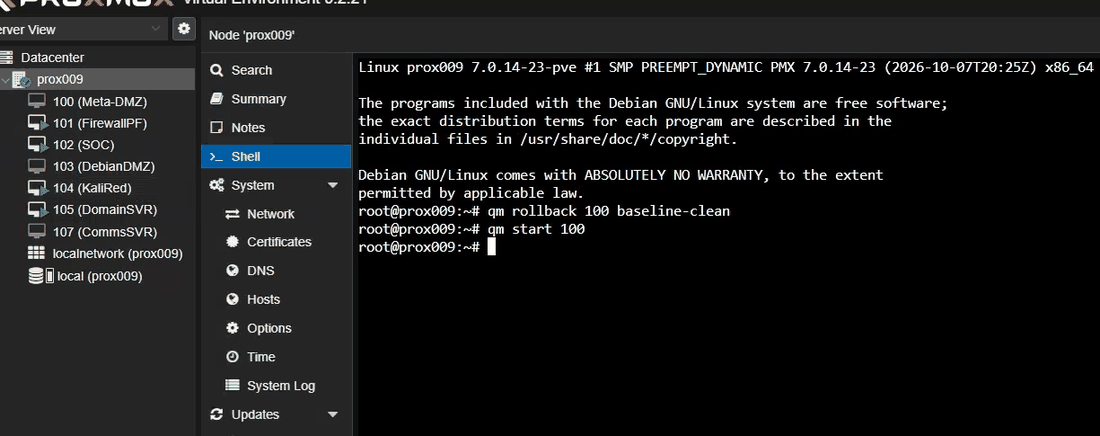
The same rollback step shown from the command line:
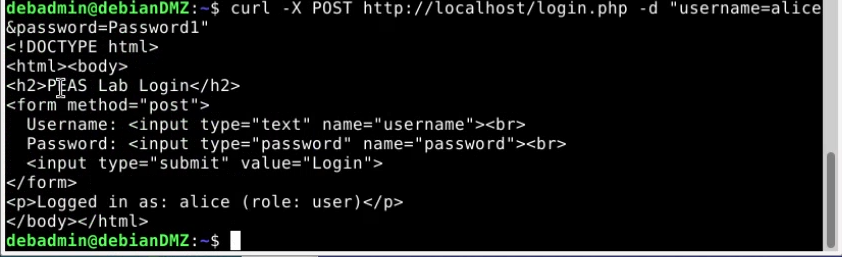
Round 3 — SQL injection. The baseline, confirmed working before any injection attempt:
A genuine detection gap was found here and documented rather than hidden: the generic Suricata ruleset did not alert on a boolean-based SQL injection payload at all — it was caught only via the database’s own query log. The SQL injection surface was later deliberately expanded beyond the single boolean bypass into a full UNION-based extraction chain across three differently-shaped database tables, giving red team column-count discovery and NULL-padding technique to work through, not just one canned payload.
While reviewing the app’s own setup for that work, a separate, genuine finding turned up: a stale reverse-proxy configuration routing requests to a service that no longer matched the current deployment —
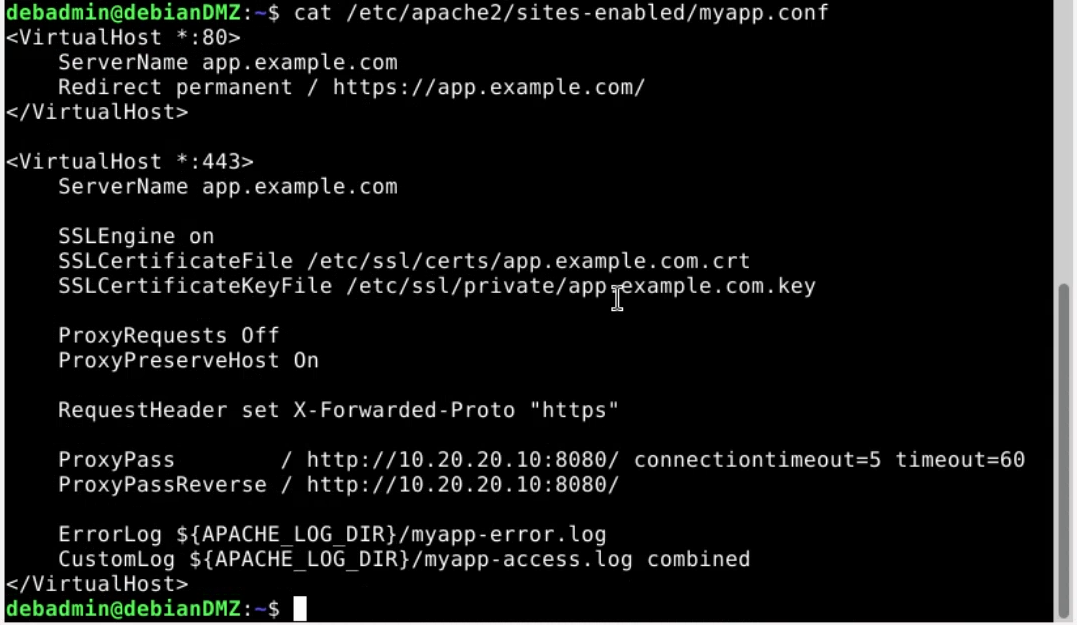
That gap, and the incident-response steps the blue team documented for it (detect, contain, eradicate, recover, lessons learned), fed directly into the project’s blue-team playbook as a reference for future rounds.
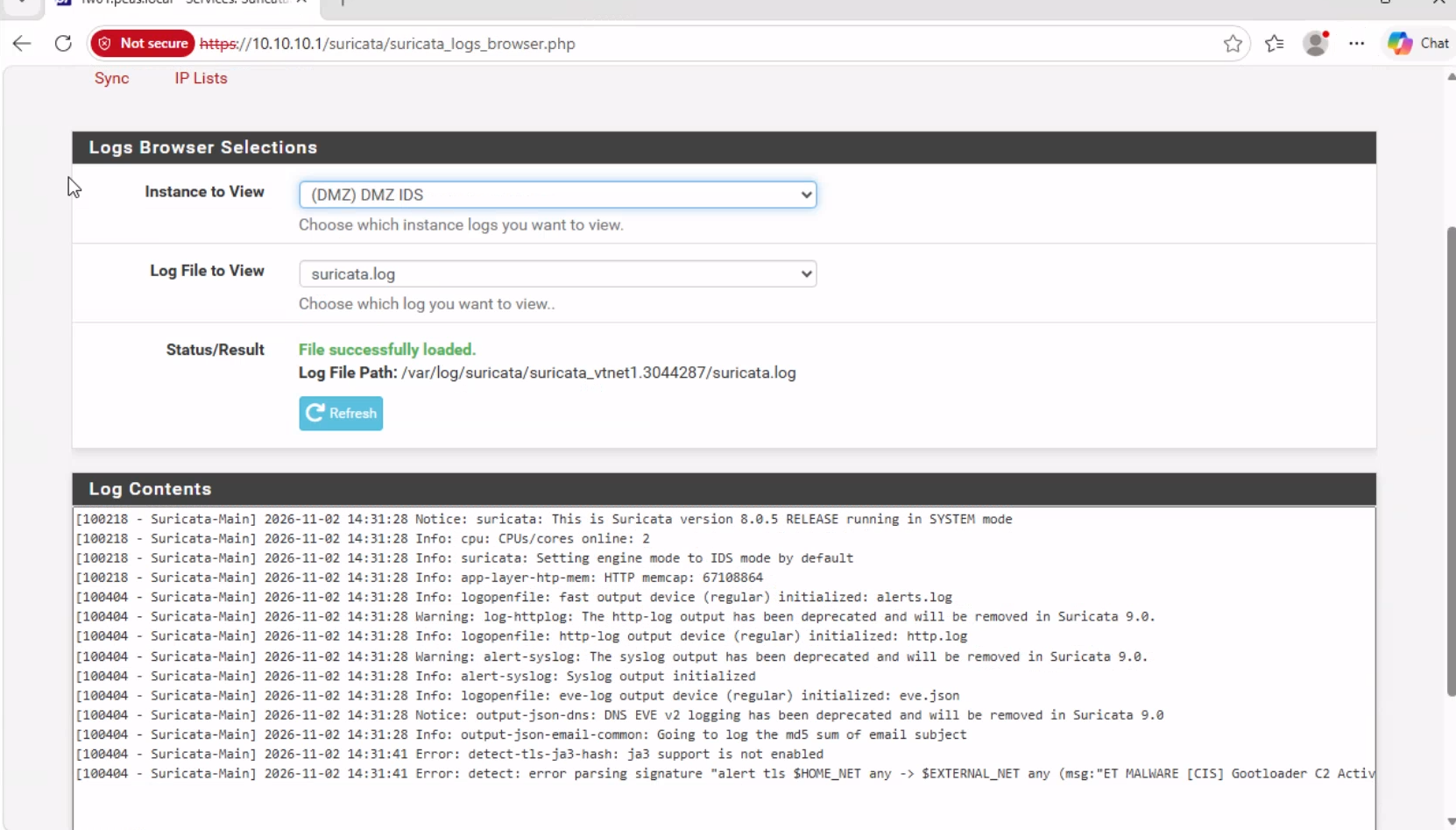
Round 4 — Blocking-mode validation. Suricata’s detection tooling, used throughout the exercise to pull logs per-instance for correlation:
Troubleshooting and validation
Real infrastructure means real problems, found and fixed rather than designed away:
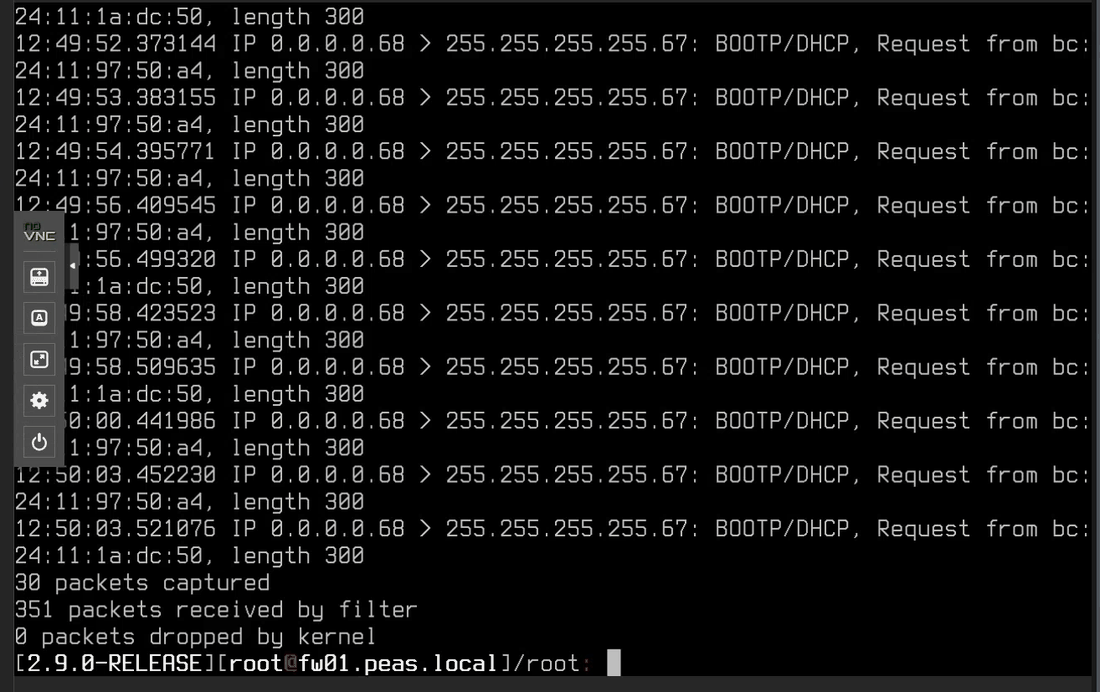
- A campus WAN outage knocked out DHCP mid-project — isolated by capturing traffic on the WAN interface itself and watching repeated, unanswered DHCP requests go nowhere, confirming the fault sat upstream of pfSense rather than in the lab’s own config:
- VPN authentication failures needed careful isolation between genuine backend/config issues and simple operator error — both occurred, and both had to be distinguished before either could be called “fixed.” The RADIUS no-reply/fixed pair on Page 3 was one strand of that work; the LDAP bind chain behind it took several more passes before it held up to a repeated test, not just a lucky first pass.
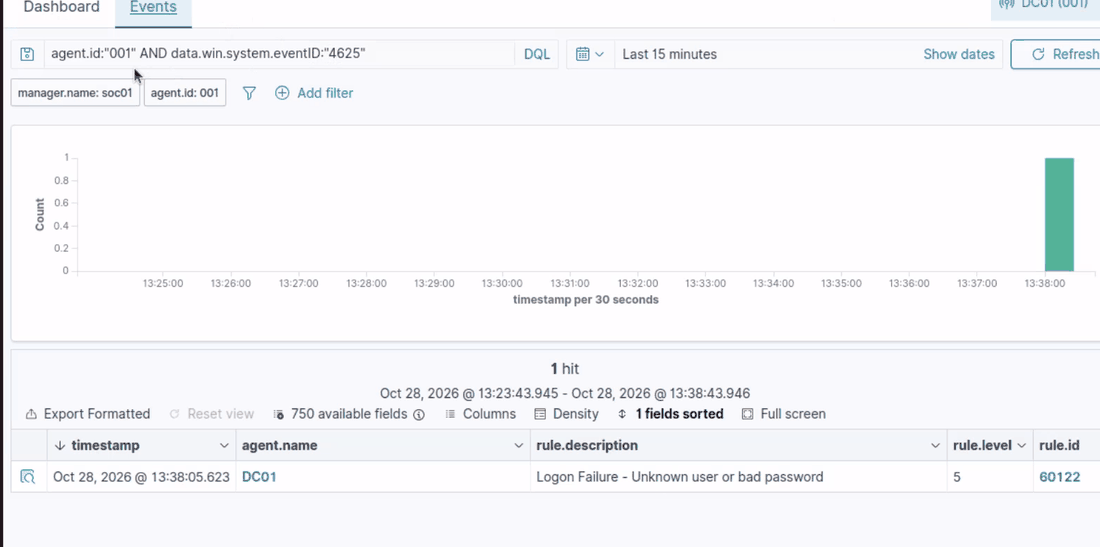
- A detection-pipeline gap between SOC’s log forwarding and Wazuh was found, corrected, and then validated by forcing a fresh alert through end-to-end:
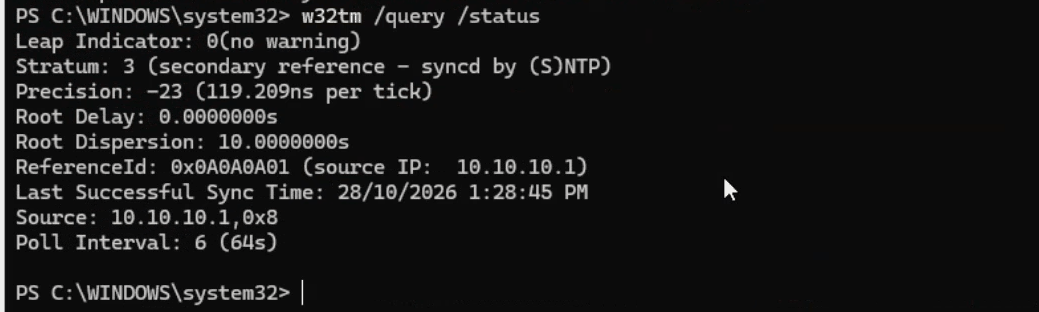
- Elsewhere in the same log-pipeline work, a domain controller’s clock had drifted out of sync with the rest of the environment, quietly breaking Kerberos and skewing event timestamps across the SOC’s correlated view until it was corrected:
- A SOC log listener that had silently stopped was found and brought back up under a fresh process, then confirmed receiving events again before being signed off as resolved:

- A shared lab host with SSH root login centrally locked down by policy needed a clean, self-removing workaround to get a backup archive genuinely off the host — rather than weakening the host’s own security controls to make the job easier.
Each of these was a case of distinguishing “looks broken” from “is actually broken, and why” before calling anything fixed — the no-reply RADIUS test, the stale reverse-proxy config, and the quiet log listener all looked like different symptoms of the same underlying discipline: verify with evidence, not assumption.
Outcomes and lessons
The project produced more than a working network: a measured, evidenced disaster-recovery figure instead of a guess; a documented detection gap with a real incident-response write-up attached to it, not just a “todo”; a genuinely expanded attack surface built collaboratively with red team rather than left as a single toy exploit; and a round structure that was deliberately simplified once the team had enough information to know five rounds added repetition, not depth. The blue-team playbook and group report both carry this evidence forward as the project’s record of what was actually tested and proven, not just planned — and the logical network design on Page 2 was the plan every one of those decisions traces back to.